Travel story
Binsar Wildlife Sanctuary, A Haven for Nature Lovers
admin · 2024-04-30
POPCORNTRIP FILMS
See the journey unfold.
Forest paths, bird calls and a temple tucked into the trees. Take your time here.
The world belongs to humans as much as it does to wildlife, birds, plants, and other living beings. However, due to our modern lifestyles, humans often neglect or fail to pay attention to conserving nature and ecosystems. This is why humans have realized the need to create reserve forests to protect these natural resources. And one such place, built on this concept, is located in the heart of Kumaon, Almora. Less than an hour's drive from Almora district headquarters lies the Binsar Wildlife Sanctuary.
https://youtu.be/2hwHb3NMRsA
How to reach Binsar:
Bus: The nearest major bus station to reach Binsar Wildlife Sanctuary is in Almora (25 km away). Regular buses are available from Kathgodam (110 km away) and Haldwani (144 km away) to Almora. Taxis or bike taxis can be hired from Almora to Binsar Sanctuary.
Train: The nearest railway station is Kathgodam (110 km away). Taxis or buses are available from Kathgodam to Almora.
Airplane: The nearest airport is Pantnagar (144 km away). Taxis or buses are available from Pantnagar to Almora.
Binsar Trip: Although the road from Haldwani to Almora via Binsar is scenic, the natural beauty becomes even more enjoyable after Almora towards Binsar.
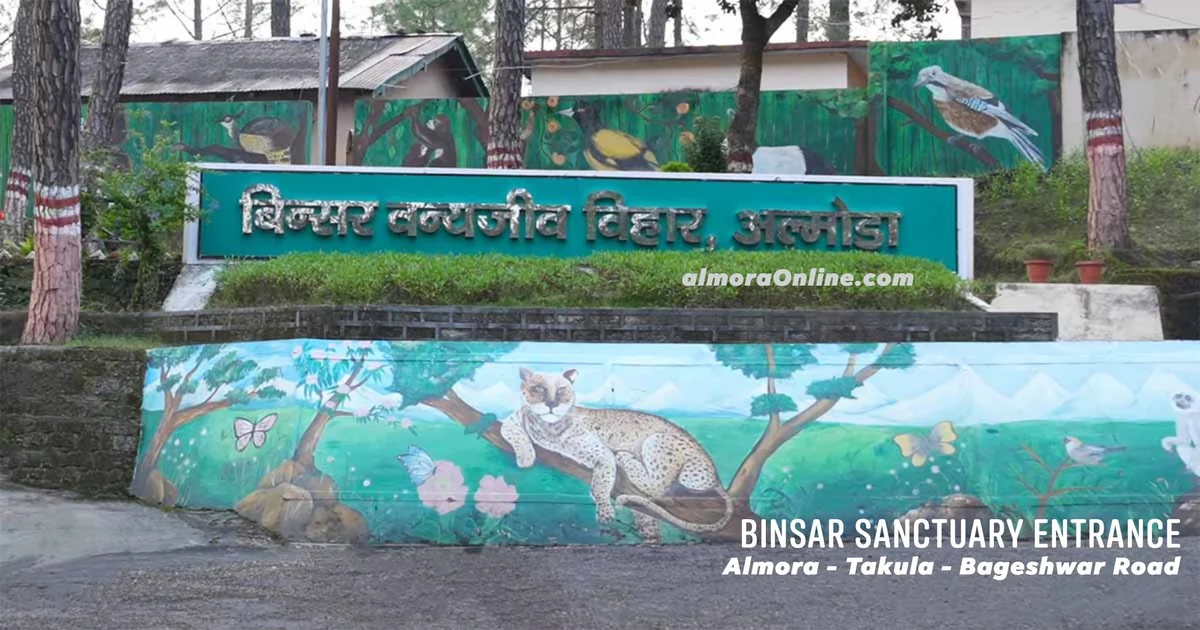
About 17 km from Almora: The entrance to Binsar Sanctuary at Ayarpani, located on the Almora - Takula - Bageshwar Road.
Entry: Permission can be obtained at the Forest Department barrier at Ayarpani Binsar Gate from 7 am to 5 pm. The entry fee for vehicles and individuals can be seen in the picture.
Entry fee Binsar
Year of Establishment: This wildlife sanctuary was established in 1988 with the aim of conserving the shrinking forest of broad-leaved oak trees. Along with this, Binsar is home to many rare trees, medicines, bio-birds and wildlife.
Inside Binsar Sanctuary: Initially, pine trees are seen while entering the Binsar Sanctuary gate. The cool, soft and fresh air fills you with enthusiasm as you enter the sanctuary. As you move along this path, they are replaced by dense broad-leaved trees.
Binsar Map: This map can be used to understand how Binsar Sanctuary is spread out and where what is.
Binsar map
Binsar Sanctuary Road: This narrow road passing through the wildlife is rough due to the forest area. Driving on this road, which is full of turns and sometimes very bumpy, also requires some skill.
Road in Monsoon: During the monsoon, vehicles may have difficulty moving on this road due to slippery soil and potholes. Keep this in mind.
Bird Watching: Different trails of different distances are set up inside Binsar Sanctuary for bird watching. Visitors can get an opportunity to see birds closely while walking peacefully. There are also boards marking such different trails.
Birds in Binsar
Trekking: Trekking enthusiasts forget everything while wandering in the dense forest area of Binsar. And in this peace, the melodious music of trees and birds takes them to another world.
Accommodation: There are only 5 or 6 resorts in Binsar Sanctuary. New constructions are not allowed here as these are reserve resorts. The location of these resorts, including the KMVN guest house, can be seen in the map. Apart from this, there are also some villages inside Binsar First, where you can reach by walking, there are some home stays there too.
Resorts/Homestays:
More information about some resorts/homestays to stay in Binsar, click the link here popcorntrip.com/binsar
Places to stay outside Binsar Wildlife Sanctuary:
There are many good resorts and guest houses in Kasardevi and Paparseli. Most tourists stay here and visit Binsar.
Important things related to Binsar Sanctuary:
- More than 62 km of trekking route has been made in this wildlife sanctuary, where you can come and roam around anytime throughout the year.
Note: If you are planning trekking, then go only with a person or guide familiar with this forest. Forests are more mysterious than we guess. You may find many poisonous plants or may encounter predatory animals who do not like the presence of any other in their area, animals who do not see any difference between peeling meat and peeling oranges.
-
Binsar is spread over an area of about 45 square km in the Central Himalayan region, with an altitude ranging from 1500 to 2500 meters above sea level From the 11th to the 18th century, Binsar was the summer capital of the Katyuri and then the Chand kings. The serene and picturesque location makes Binsar one of the most beautiful places in Kumaon, Uttarakhand.
-
Must-Visit Points/Activities in Binsar Sanctuary:
-
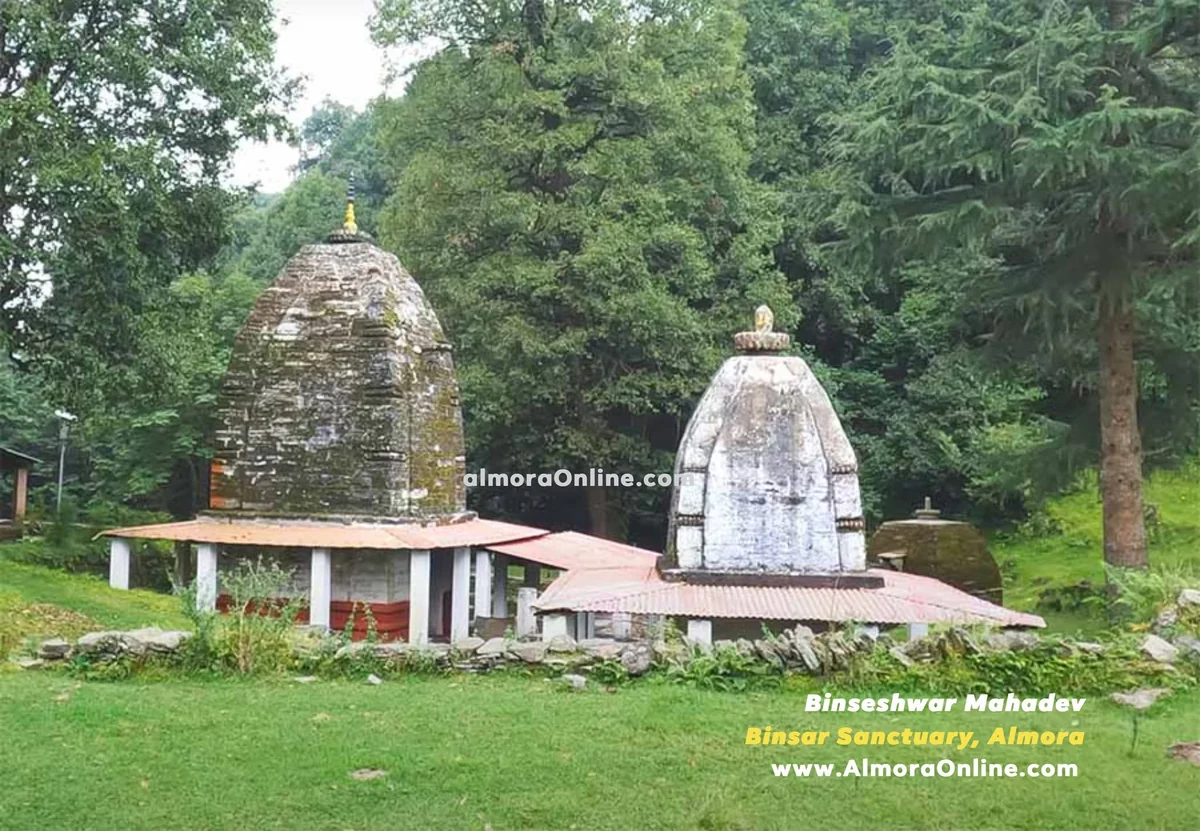
Bineshwar Mahadev Temple: Located about 8 km from the Binsar Sanctuary Gate, the Bineshwar Mahadev Temple is situated in the center of this sanctuary and is dedicated to Lord Shiva. The name of this place comes from the name of this temple itself, Bineshwar, which the Britishers could not pronounce and the name of this place was read Binsar.Bineshwar is an ancient temple, established during the time of the Chand and Katyuri kings. This temple is situated at the edge of an open green field. Coming here, one experiences immense joy and peace. The locals have deep faith in this temple.
Bineshwar Mahadev Temple Almora - After spending time at Bineshwar Temple, you might also want to visit Binsar's highest point, Jhandi Dhar, also known as Zero Point. From here, you can also see the vast ranges of the Himalayas, if there's no mist in the hills. Winters are generally the best time to see them.
-
Trekking: You can also trek from Bineshwar Mahadev Temple to Zero Point if you're interested in trekking. However, if you haven't been before, it's advisable to go with a guide, as this forest is also home to many carnivorous animals who don't like unnecessary interference in their territory. Guides have knowledge of wildlife locations and their behavior.
-
Kumaon Mandal Vikas Nigam (KMVN) Rest House: Continuing on our journey by vehicle, we travelled on a road lined with various species of trees including rhododendron, oak, and others. About 3-4 km from Bineshwar Temple is the Kumaon Mandal Vikas Nigam Rest House.
Here, we met Bhoj ji, who informed us that he is a registered nature guide with the Forest Department of this sanctuary. You can hire guides to explore Zero Point and various forest trails. -
PWD Rest House: A little further from this KMVN guest house is the PWD rest house, which was once the residence of Henry Ramsay, the Kumaon Commissioner during the British era. Swami Vivekananda also stayed here. Apart from him, many other famous Indians have stayed in this bungalow.
-
Biodiversity: This sanctuary is home to over 150 species of birds along with animals like leopards, barking deer, goral, and spotted deer. Additionally, there are many varieties of oak, rhododendron, deodar, pine trees, and several medicinal herbs found here.
-
Experiencing Rural Uttarakhand: Along with witnessing biodiversity, those who want to experience rural life in Uttarakhand get everything here at once. Since human intervention is minimal due to it being a protected forest area, many valuable medicinal plants get the opportunity to flourish freely here. This is what makes this place special.
-
Walking Trails: Binsar Sanctuary can also be reached by trekking from nearby villages bordering the Binsar wildlife area - Jageshwar, Dhaulchhina, Baasoली (Baasolly) etc.
What Season is Best for What?
-
Summers: May-June is when most tourists visit Binsar in the summer. This is the time when ripe Kafal, a small and delicious fruit found in the hills, are available. The entire jungle is filled with Kafal trees.In summers, dry leaves like pine needles falling from pine trees can sometimes pose a threat to wildlife in the forest.
-
Monsoon: July to September is the rainy season. During this time, the paths can be a little slippery and damaged, and the greenery is at its peak. Be careful while walking during this season.
-
Autumn: The cold starts increasing from October onwards, which lasts till February and sometimes March. This is the best time to see clear views of the Himalayas.
Buransh Flower -
Winter: It snows several times between December and February. The night time temperature can also drop below freezing.
-
Spring: In March-April, you can witness the beautiful flowers of rhododendron along with various other flower species blooming here. The scattered Rhododendron flowers on the ground look like a red carpet laid out by nature. This is also a good time for butterfly watching and bird watching.
Overall, Binsar offers a unique blend of natural beauty, historical significance, and diverse wildlife. Whether you're interested in trekking through dense forests, admiring breathtaking Himalayan views, or simply experiencing the tranquility of a remote mountain sanctuary, Binsar has something for everyone.
So pack your bag, lace up your hiking boots, and get ready to discover the magic of Binsar! Here are some additional tips for your trip:
-
What to pack: Pack comfortable clothes and shoes suitable for hiking and walking on uneven terrain. Don't forget warm layers for the evenings, even in summer, as temperatures can drop significantly. If you're visiting during the monsoon, pack rain gear. Sunscreen, a hat, insect repellent, and a camera are also essentials.
-
Things to do besides trekking: If you're not a big trekker, there are still plenty of ways to enjoy Binsar. Relax at your resort and take in the stunning views. Go for bird watching walks with a guide. Visit the Bineshwar Mahadev Temple and learn about its history. You can also explore nearby villages like Jageshwar, known for its ancient temples.
-
Responsible tourism: Remember, Binsar is a fragile ecosystem. Be a responsible tourist by following park rules, staying on designated trails, and minimizing your impact on the environment. Pack out all your trash and avoid disturbing wildlife.
-
Booking your stay: It's best to book your accommodation in advance, especially during peak season (summer and autumn). Consider staying at the KMVN or PWD guest house for a historical experience, or choose one of the private resorts for a more luxurious stay.
With a little planning and these tips in mind, you're sure to have an unforgettable experience at Binsar Wildlife Sanctuary. Enjoy your trip!
-